About
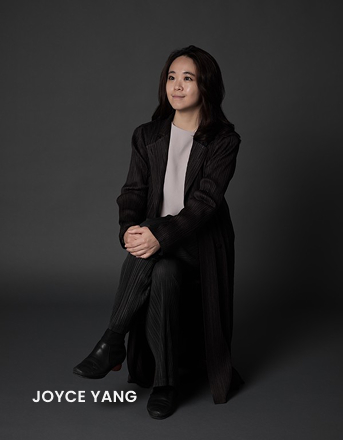
Joyce Yang

Joyce Yang is a registered architect in both Victoria, Australia, and Taiwan. She holds a Bachelor of Architecture and a Master of Architecture from RMIT University.

During her professional practice in Australia, she worked on large-scale international projects, including public buildings, campus design, high-rise residential developments, and mixed-use complexes. Through these experiences, she developed strong capabilities in cross-disciplinary coordination and navigating complex design environments.

After returning to Taiwan, she has continued to apply internationally grounded design methodologies while responding sensitively to local urban conditions and residential contexts. Her work maintains clarity, consistency, and rigor across different cultural settings and project scales.

Her design approach is rooted in rational decision-making and supported by digital workflows such as BIM and parametric modeling, ensuring coherence from concept through execution.

She believes that architecture is not merely an act of formal expression, but a professional discipline, one that must endure intellectually, technically, and over time.

Since returning to Taiwan, she has adapted international design methodologies to respond to local urban conditions and residential contexts, maintaining consistent logic and quality across different cultural and project scales.

Her design approach is grounded in rational decision-making and supported by digital tools including BIM and parametric modeling, ensuring clarity and consistency from concept through execution.

She believes architecture is not merely formal expression, but a professional discipline that must withstand the test of time.

Architect's Profile

Architectural Practitioner

She approaches architecture as a discipline requiring continuous testing and verification. Through clear methodologies and rational judgment, she ensures design responds to the real needs of users and site—not just on paper, but in practice.

Human-Centered

In practice, she consistently places people at the core of design. Architecture must respond to site conditions and regulations, but equally to how people occupy, navigate, and experience space.

Human-centered design is not sentimental idealism, but design judgment grounded in rational analysis. From circulation and spatial scale to daylighting and ventilation, every decision considers the realities of everyday use.

When architecture genuinely addresses human needs, space develops its inherent logic and warmth, revealing value through sustained occupancy.

Diagram Thinking

Architecture involves structure, building systems, regulations, and multidisciplinary collaboration. To navigate this complexity, she uses diagrams, models, and visualization to transform abstract design decisions into frameworks that enable clear discussion.

Through BIM and parametric modeling, design becomes an iterative process rather than a fixed outcome—continuously tested, discussed, and refined. Drawings and models serve not to showcase aesthetics, but to facilitate effective decision-making among clients and project teams through shared understanding.

When design logic is clearly articulated, communication becomes direct and precise, allowing practice to maintain rigor and efficiency within complex constraints.

Design Philosophy

Between rational analysis and emotional understanding, we establish design logic that can be tested and verified, using it to explore and respond to the essence of space.

Narrative

Architecture is experienced through everyday use, not visual observation alone. Movement, pauses, and shifts in perspective shape perception.
Narrative is not about imposing a predetermined story, but about enabling intuitive spatial understanding through the organization of circulation, scale, and light.
When design requires no explanation, architecture communicates through its inherent order and rhythm, entering into dialogue with its occupants.

Timeless

Architecture must continue to respond as time unfolds. A building's completion is not a conclusion, but a beginning.
Design is tested through sustained use—whether circulation remains efficient, whether scale stays appropriate, and whether space adapts to evolving needs. These qualities only fully reveal themselves over time.
As human thinking and lifestyles change, architecture must evolve accordingly. Design that responds to shifting conditions moves forward; static solutions become obsolete.

Human-Centered

Human-centered design is not emotional appeal, but fundamental design judgment. When design cannot respond to everyday realities, even complete formal expression fails to endure.
The design process focuses not on single scenarios, but on whether space maintains clear organization and stability across varying use conditions. When space withstands both time and use, architecture transcends observation and fulfills its essential role of serving people.
Human-centered design distinguishes between desire and genuine need within complex constraints, enabling responsible and verifiable spatial decisions.

Milestones

Education and Licensure

  • Registered Architect, Victoria, Australia
  • Registered Architect, Taiwan
  • Master of Architecture, RMIT University
  • Bachelor of Architecture, RMIT University

Current Practice

  • Founder and Principal, Joyce Yang Architects​
  • Founder and Principal, DXSPACE Interior Design Studio

Professional Experience in Taiwan

  • Golden Jade Construction Group:Architectural Designer / Interior Designer

International Professional Experience

Woods Bagot (Melbourne Office) Participated in the following projects:

  • Christchurch Convention Centre Redevelopment
  • Melbourne Mixed-Use Developments (hotel, retail, office)
  • Melbourne Convention and Exhibition Centre Phase 2 Expansion
  • University of Melbourne Design Competition
  • Auckland Mixed-Use Development (hotel, residential, commercial)
  • National Disability Insurance Scheme (NDIS) Headquarters

Elenberg Fraser

  • Multiple residential tower projects and urban design competitions in Melbourne
GO TO DXSPACE
Top