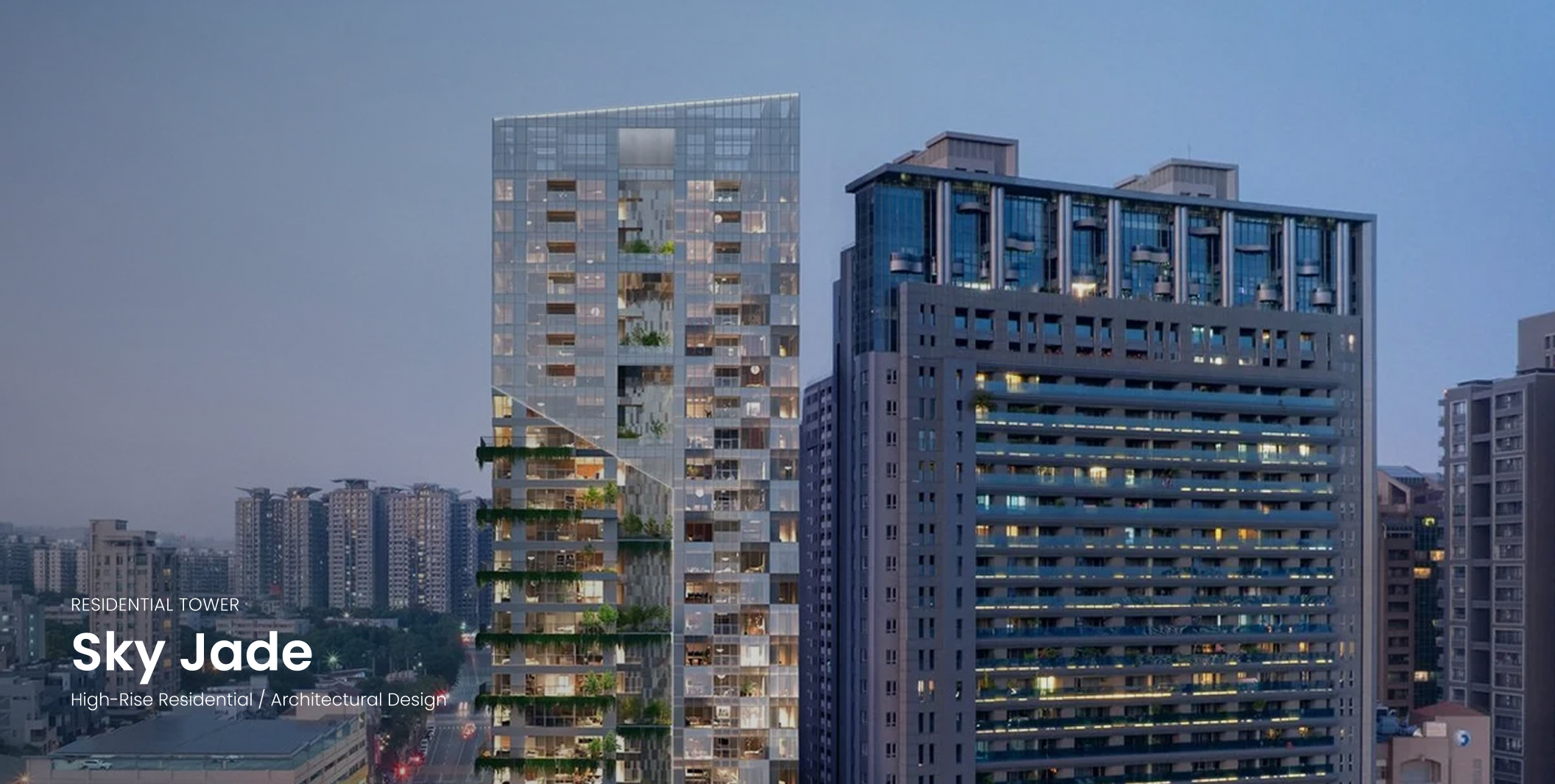


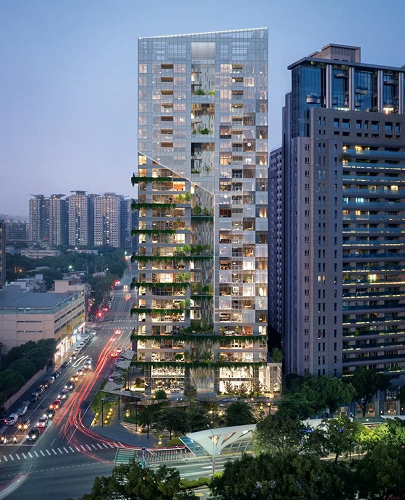
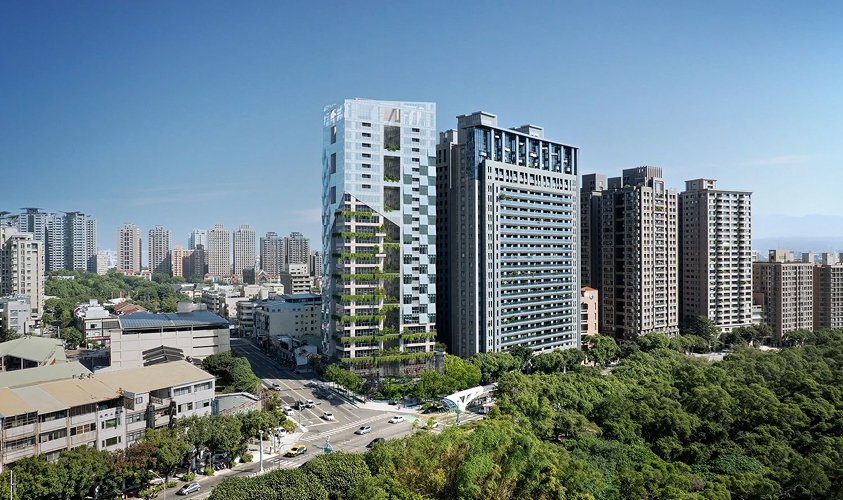
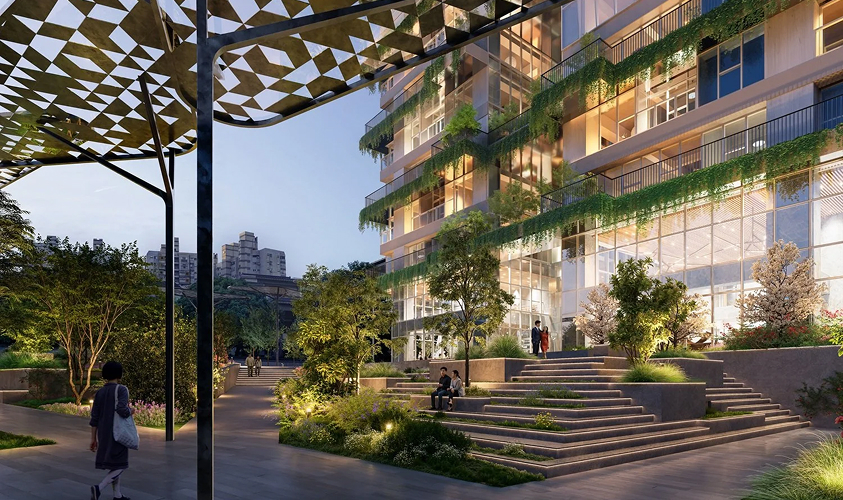
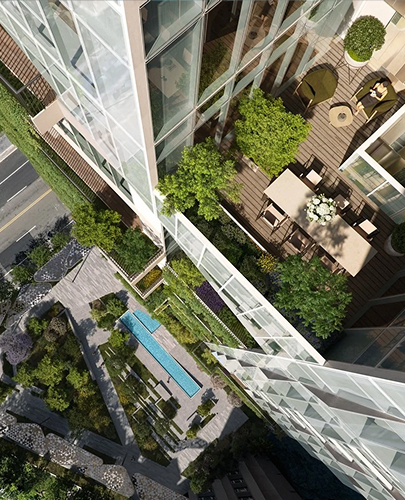
This project dissolves architectural boundaries, allowing the urban vitality of Taiwan Boulevard and the greenery of Yumen Road to converge. The architect uses soft geometric lines to shape the exterior, translating the rhythm of the land into a visual language and allowing greenery to rise from the ground toward the sky. This vertical oasis is not only a place to live, but a living environment where light and breeze move freely, gently carving out a habitat that coexists with nature and engages the senses within the rigid urban fabric.
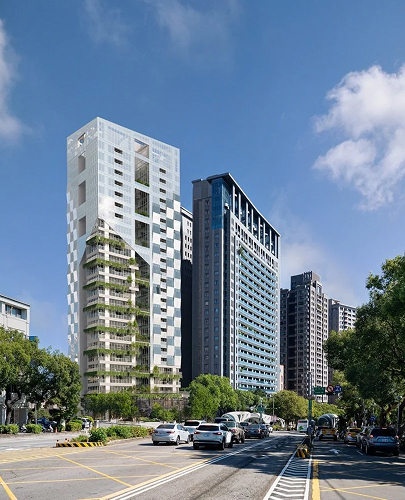
Through parametric design, the architect rethinks the formation of high-rise residential exteriors by translating airflow, sunlight, and environmental conditions along Taiwan Boulevard into a continuous and fluid geometric language. The building envelope is no longer a heavy and enclosed surface, but a dynamic layer that responds to wind and light, shaping the tower as if it were carved by environmental forces, like a valley formed by air currents.
The staggered horizontal layers and articulated exterior transitions not only create a crisp and rhythmic appearance, but also generate natural shading and ventilation within the urban heat island context. At different heights and orientations, the building responds to its specific microclimatic conditions.
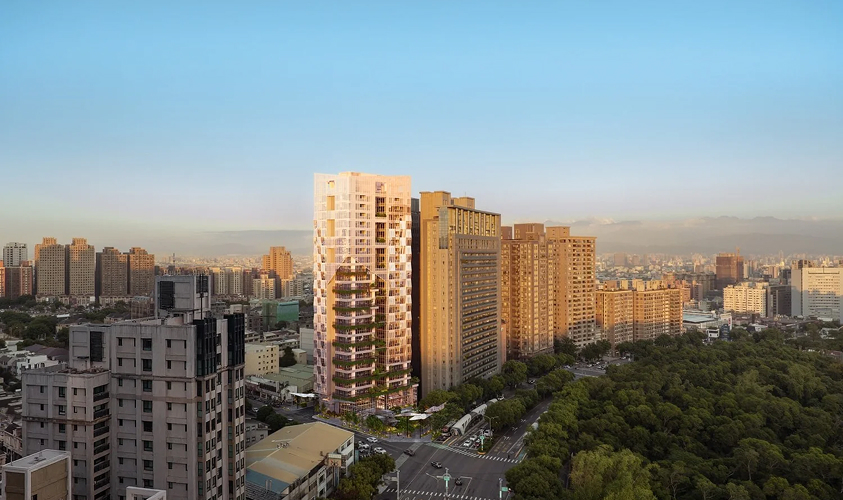
As greenery penetrates concrete and steel, extending upward layer by layer along the exterior, the building skin gradually transforms into a living membrane that modulates light and temperature. The core design concept is the dissolution of boundaries, allowing a rationally generated architectural form to soften over time through vegetation and growth, expressing a sense of vitality and life.
At dawn and dusk, this vertical forest presents a continuously evolving visual narrative through the changing rhythm of light and greenery, offering the city an architectural expression that remains in dialogue with its environment.
 Top
Top

 Back to Previous Page