A design's viability depends on the clarity of its methodology. BIM serves as an essential tool for design decision-making, helping integrate spatial planning, structural systems, and building services while ensuring consistency across every stage.
BIM is not merely a modeling method, but a decision-making system that allows design judgments to be tested and traced.
From the early stages of design, spatial layout, structural logic, and building services can be integrated simultaneously within a single digital model. Design is no longer developed in isolated professional segments, but as a holistic process based on complete relationships. This allows designers to clearly understand the impact of different choices at an early stage, rather than relying solely on experience, assumptions, or estimation.
BIM The digital model established through BIM is not the result of a single phase, but a carrier of information that continuously accumulates as the design develops. From scale, materials, and components to system configuration, the model accurately reflects the complexity of the design and allows potential conflicts to be identified and resolved before construction begins. This shifts the design process from reactive correction to proactive anticipation.
When design conditions change or requirements are adjusted, the model immediately reveals the chain effects of those changes, including spatial use, system configuration, construction quantities, and cost structure. Every adjustment is made within a clearly visible overall context, rather than through fragmented or piecemeal responses.
Through BIM, cross-disciplinary integration and verification are completed before construction. Architecture therefore becomes not merely a final outcome, but a system whose feasibility has been understood, examined, and confirmed from the moment design decisions are made. When a building is fully understood before it is used, space can truly return to its essential role of serving its users.

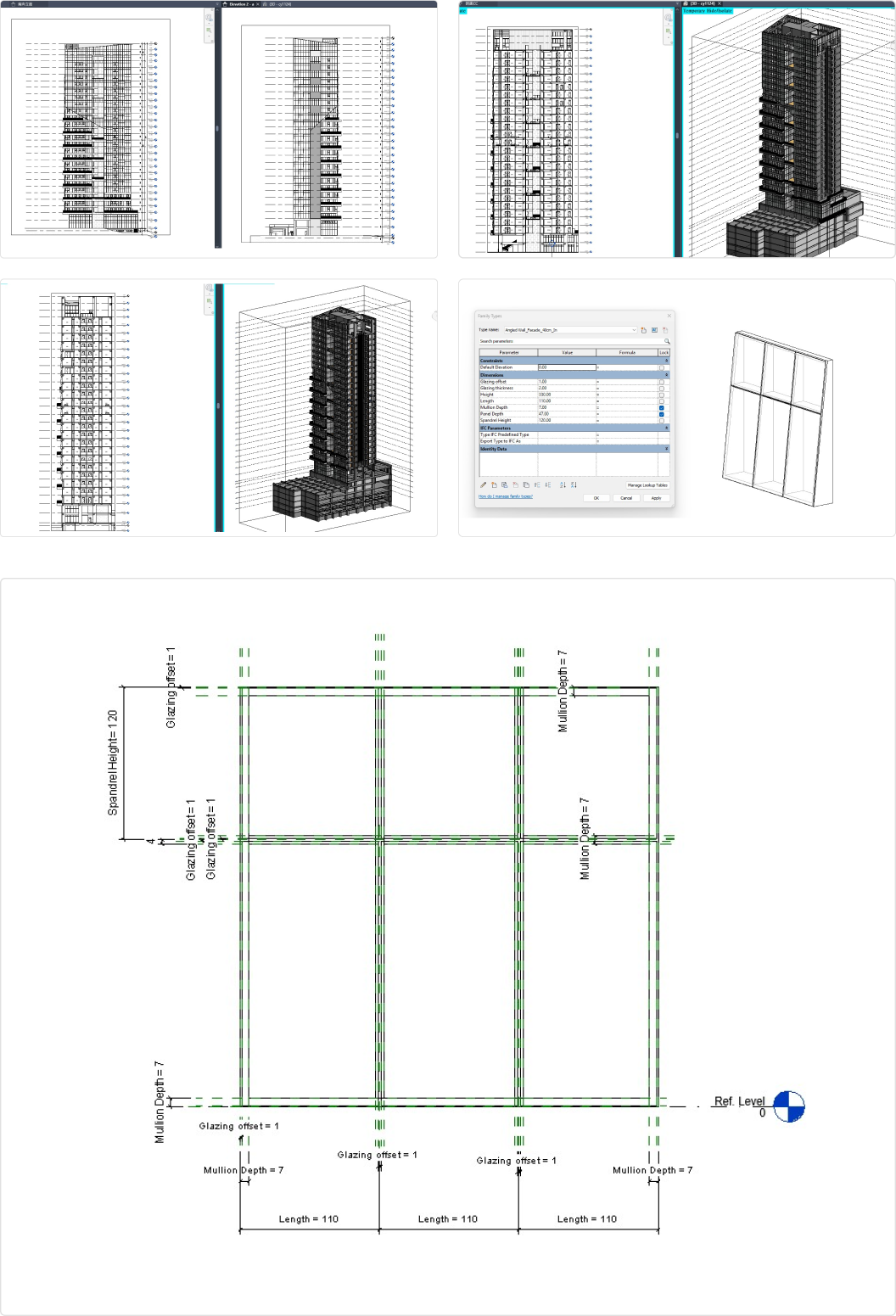
Through parametric design, variables such as dimensions, materials, visibility, and types are converted into adjustable parameters. This allows design changes to be updated simultaneously across all related elements within a single system, rather than relying on repetitive manual revisions.
By setting and managing parameters, modifications are reflected instantly throughout the entire model, significantly improving design efficiency and greatly reducing human error. This method can also be applied across different projects, ensuring consistency in design logic and quality from one project to another.
Within a single model framework, plans, elevations, sections, three-dimensional models, and quantity schedules can be generated simultaneously. Any design adjustment updates all related drawings and information in real time, ensuring that design decisions at every stage are based on a clear and consistent reference.
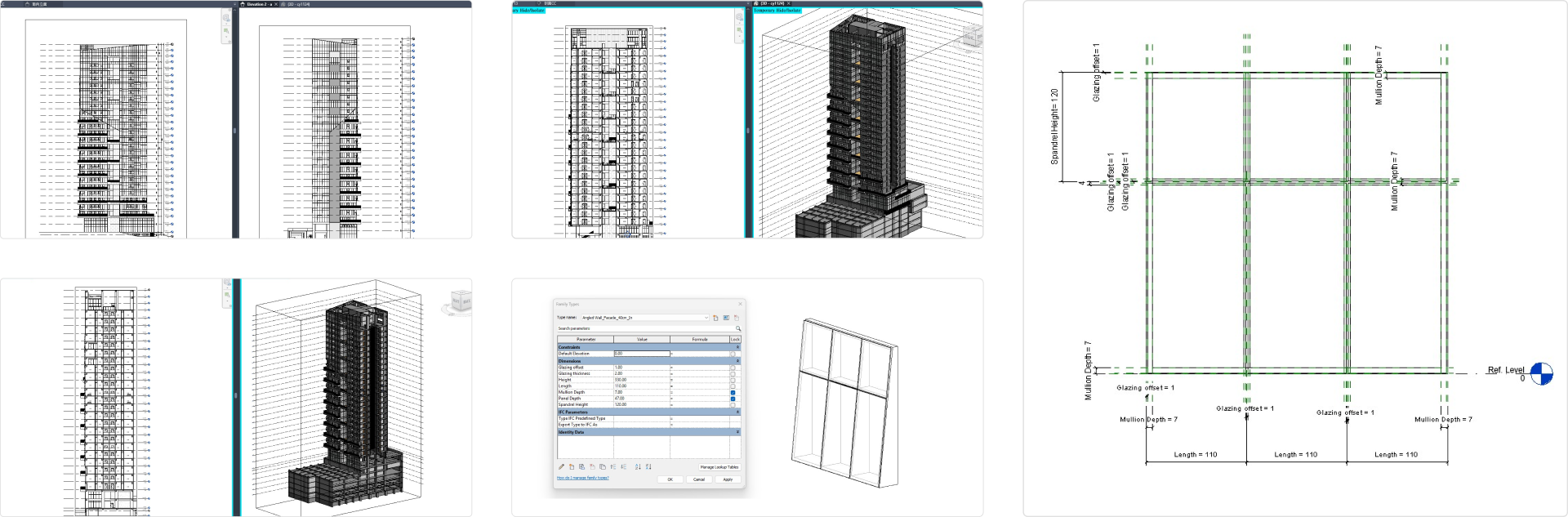

Through early planning and needs assessment, program requirements, budget direction, site conditions, and constraints are clarified, establishing a clear and feasible foundation from the outset.
By consolidating consensus and setting clear objectives, the design can progress with direction, avoiding repeated revisions or deviation from actual needs.
With BIM, spatial layout, massing relationships, and overall structure are presented clearly, allowing design intent to be understood early rather than imagined solely from plans.
BIM helps transform abstract ideas into content that can be discussed and evaluated, confirming whether design directions align with expectations and requirements, and enabling informed adjustments.
During the detailed development phase, confirmed design directions are further refined.
Through BIM, spatial details, structural arrangements, and system relationships are reviewed in an integrated manner. Potential issues can be identified early and resolved before construction, supporting a smooth transition into detailed design.
 Top
Top

 Back to Home